


Medicaid Waiver Payments on a W-2 - Cash Flow Implications
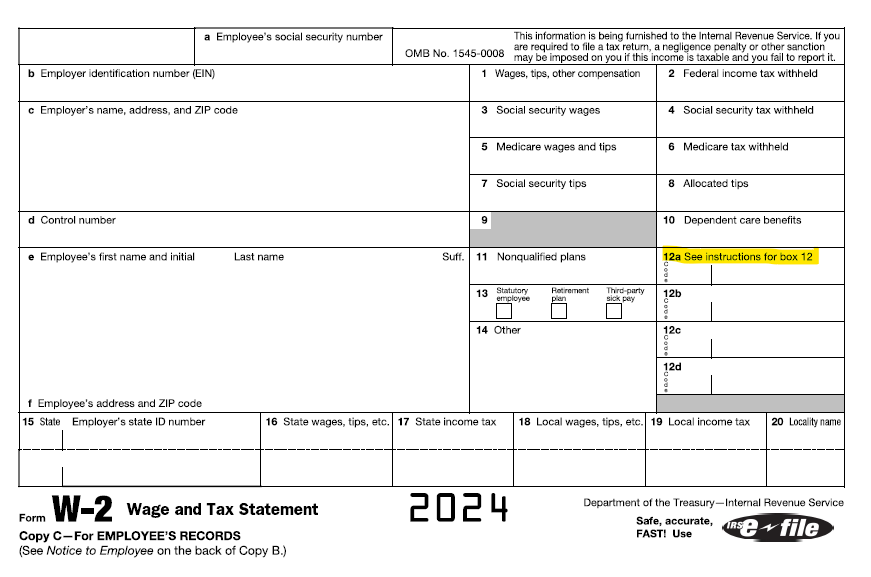
An analyst recently called into the Bukers Hotline with a unique situation. A borrower, who hadn’t yet filed their 2024 tax return, submitted their 2024 W-2 for cash flow analysis. When spreading the salary information directly off the W-2, the analyst noticed that the amount in Box 1 was significantly lower than what was reported in prior years. The analyst also noticed a large amount in Box 12 with the accompanying code “II”, noting that there was no amount in Box 12 in prior years. The analyst asked us, “What does all of this represent? And what is my true cash flow for the borrower?”
Let’s dig a little deeper to help the analyst on this month’s cash flow article.
Medicaid Waiver Payments
On a borrower’s W-2, if Box 12 contains code “II”, that means that our borrower received Medicaid waiver payments excluded from gross income. Back in 2014, guidance was released by the IRS regarding the federal tax treatment of income earned by caregivers in specific situations. For a caregiver who tends to a sick individual and receives Medicaid waiver payments as compensation for their caregiving, they may be allowed to exclude that income from federal taxation. To qualify for this tax-exempt treatment of the income earned, the caregiver must reside in the same home as the sick individual, along with some other criteria.
So, How Does It Cash Flow?
The cash flow implications of Medicaid waiver payments are relatively straightforward. The income that is tax-exempt and reported in Box 12 with code “II” on the borrower’s W-2 should be added to cash flow. Medicaid waiver payments are a form of income that is exempt from federal taxation, yet still cash earned by the individual and needs to be treated accordingly for cash flow analysis.
What if our borrower had given the analyst their tax return instead of a Form W-2? Well, the taxable portion of W-2 wages would be reported on Form 1040, Line 1a. The nontaxable portion, comprised of these Medicaid waiver payments, could be reported in a couple of areas on our borrower’s tax return. They could be listed on either Form 1040, Line 1d, or they could be reported on Form 1040, Schedule 1, Line 8s. The difference is a preference of the borrower and tax preparer based on whether they want to take the earned income credit or not. This is simply presentational and does not affect cash flow. The analyst would add these amounts representing nontaxable Medicaid waiver payments to cash flow, regardless of where they are reported on Form 1040.
Concluding Takeaways
The main takeaway as an analyst is, if your borrower is a caregiver, be aware that a portion of their income earned from that profession has the potential to be tax-exempt. If their wages reported on Line 1a of Form 1040 decrease drastically from their historical performance, check your borrower’s return for any listing of nontaxable wages from Medicaid waiver payments, either listed on Form 1040 Line 1d or on Schedule 1, Line 8s. These amounts might need to be added to your borrower’s wages to arrive at total cash flow for wages earned.
This is another great example of a situation where it is helpful to have a solid understanding of the facts and circumstances governing your borrower’s day-to-day life. Since our analyst was aware that the borrower worked as a caregiver for their relative, it was easy to deduce why the rule for tax-exempt income in this situation applied. At Bukers, we always recommend that our clients get to know their borrowers, and the ins and outs of their sources of cash inflow and outflow.